Clear Skin, Bright Future: A Smarter Routine for the Shift from Breakouts to Early Aging
Skin that’s been managed like “acne-prone” for years can get trapped in a harsh cycle: foamy cleansers, frequent acids, and emergency spot treatments. Then, almost quietly, new concerns show up—tightness, sensitivity, dehydration lines, dull tone, and the first fine lines. The goal isn’t to abandon acne care; it’s to transition into a routine that keeps pores clear while strengthening the barrier, improving tone, and supporting collagen—without constantly inflaming breakouts.
Below is a step-by-step map for moving from breakout-first to resilience-first, plus a simple two-week transition plan to reduce trial-and-error and keep progress steady.
Why the transition feels tricky
Acne routines often “work” fast because they’re aggressive. Over time, that same intensity can become the reason skin starts acting unpredictable.
- Barrier strain adds up: Frequent exfoliation, strong cleansers, and multiple spot treatments can compromise the skin barrier over time.
- Early aging looks worse on irritated skin: Dullness, dehydration lines, and uneven tone often intensify when skin is thinned out or constantly inflamed.
- Adult breakouts aren’t always about oil: Stress, hormones, and inflammation can drive acne—so “stronger” isn’t always “better.”
- The best balance hits three targets: clear pores, calm inflammation, and consistent daily UV protection.
For acne basics and treatment options, the American Academy of Dermatology offers a helpful overview: https://www.aad.org/public/diseases/acne.
What changes as skin moves from breakout-first to resilience-first
Think of this shift as re-prioritizing “calm + consistency.” The routine becomes more strategic—fewer repeated hits, more planned support.
- Cleansing becomes barrier-friendly: Choose gentle surfactants and reserve stronger cleansers for heavy makeup or very oily days.
- Exfoliation turns targeted: Fewer days per week, with clear “pause and repair” rules if irritation shows up.
- Hydration becomes treatment-level important: Humectants plus a moisturizer that reduces transepidermal water loss can improve texture while reducing irritation-triggered breakouts.
- Actives get layered with intent: One “pore” active (like salicylic acid or a retinoid) plus one “tone/firmness” support (like niacinamide or vitamin C)—not everything at once.
- Sunscreen becomes non-negotiable: It protects against dark marks, collagen breakdown, and sensitivity from actives. FDA guidance is a solid reference: https://www.fda.gov/drugs/understanding-over-counter-medicines/sunscreen-how-help-protect-your-skin-sun.
| Routine area |
Breakout-first habit |
Balanced transition approach |
| Cleanser |
Foaming/stripping twice daily |
Gentle cleanse; double-cleanse only when needed |
| Exfoliation |
Multiple acids daily |
2–4x/week max; adjust to tolerance |
| Treatment |
Spot treat + harsh actives stacked |
Choose 1 primary treatment; add support actives slowly |
| Moisturizer |
Skipped to “avoid oil” |
Barrier-supporting moisturizer to reduce irritation breakouts |
| SPF |
Occasional |
Daily broad-spectrum; reapply with extended sun exposure |
Core routine that protects against both breakouts and early aging
Morning baseline (simple, repeatable)
- Gentle cleanse (or just rinse if you wake up dry/tight)
- Optional support: antioxidant serum or niacinamide
- Moisturizer (lightweight is fine—just consistent)
- Broad-spectrum sunscreen every day
Evening baseline (where progress is built)
- Gentle cleanse
- Treatment night (rotate based on tolerance)
- Moisturizer; add a soothing layer if dryness appears
Bridge actives that often serve both goals
- Retinoids: help with breakouts and fine lines. Learn safe usage basics here: https://www.aad.org/public/everyday-care/skin-care-basics/skin-care/retinoid.
- Azelaic acid: supports uneven tone, redness, and bumpy texture (often a good “calm but effective” option).
- Salicylic acid: great for pores when used sparingly and not layered aggressively.
Barrier helpers that play well with actives
Look for ceramides, glycerin, panthenol, and colloidal oatmeal. Introduce one change at a time so you can tell what’s helping—and what’s irritating.
A quick rule for confusion: a purge is usually temporary and patterned (like your usual breakout zones). Irritation tends to look like stinging, persistent redness, or scaling that spreads beyond typical acne areas.
A simple 14-day transition plan (less guesswork, more consistency)
- Days 1–4: Reset and repair. Pause strong acids. Use gentle cleanse, moisturizer, and SPF. Spot-treat only if needed.
- Days 5–7: Reintroduce one active. Choose either a retinoid OR salicylic acid (not both at full strength). Start 2 nights/week.
- Days 8–10: Evaluate. If dryness or burning shows up, reduce frequency and focus on barrier ingredients for 2–3 days.
- Days 11–14: Add a support step. Consider niacinamide or azelaic acid on non-treatment nights. Keep SPF daily.
- Rule of thumb: Progress comes from tolerability. The “best” routine is the one you can repeat for months.
Where an AI-powered routine builder and glow plan helps most
For a guided structure, explore the Clear Skin, Bright Future digital skincare guide with AI-powered routine builder and glow boost plan.
Common mistakes that trigger setbacks
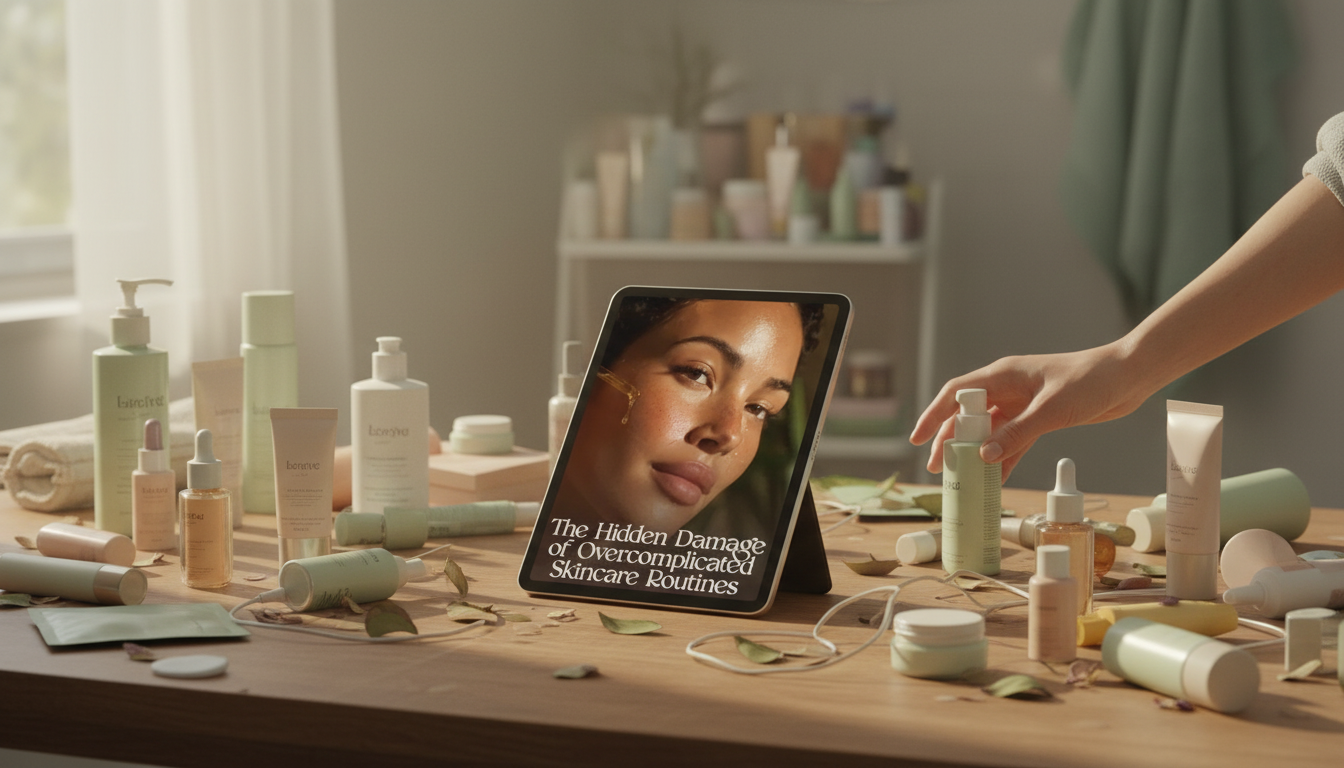
If your routine has slowly grown into “everything, every day,” the The Hidden Damage of Overcomplicated Skincare Routines guide can help you scale back without losing results.
Who this approach is best for
For an extra at-home support option around the eye area, consider the 7-Color LED Eye Beauty Device with micro-current facial lifting and firming to complement a consistency-first routine.
FAQ
Can retinoids be used if breakouts are still happening?
Yes for many people. Start low and slow, keep moisturizer and daily SPF consistent, and avoid stacking retinoids with strong acids until your skin clearly tolerates it.
How often should exfoliation happen during the transition?
Typically 2–4 times per week at most, depending on product strength and sensitivity. If you notice stinging, persistent redness, or peeling, reduce frequency and prioritize barrier repair.
What’s the fastest way to look brighter without triggering acne?
Daily sunscreen plus consistent hydration, a gentle exfoliation cadence, and one well-tolerated treatment active usually delivers the quickest visible glow. Avoid frequent product switching, which can keep skin stuck in irritation cycles.
Recommended for you













Leave a comment